
 Instrumental Access 2019:
University of Eswatini
Department of Chemistry
In Eswatini, expanding local opportunities in research and access to hands-on chemistry education
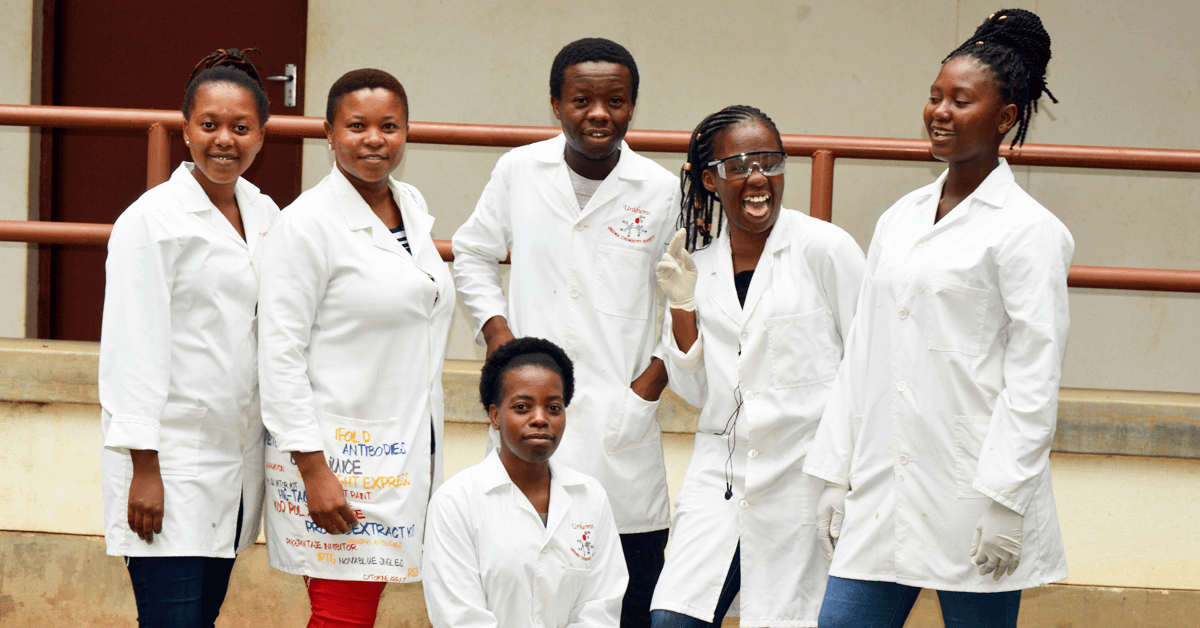
Dr. Thabile Ndlovu (second from left) with fourth year students
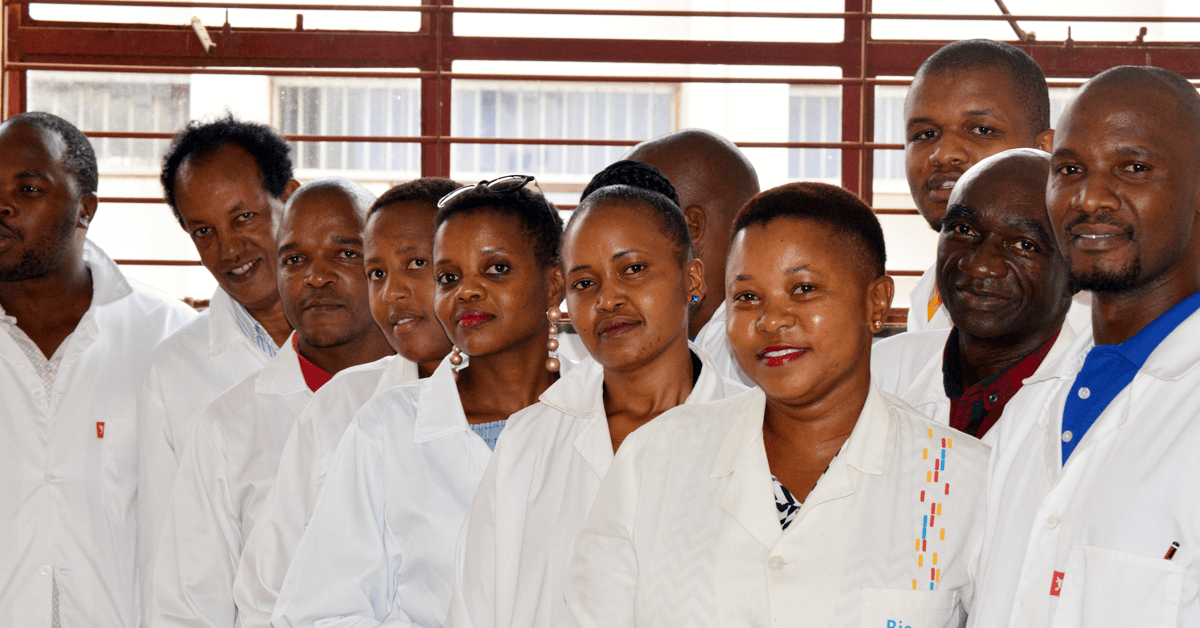
Department of Chemistry faculty and staff

Dr. Silavwe (right) with his BSc student in the Chemistry lab at the University of Eswatini

The University of Eswatini campus
Meet our Awardee
The University of Eswatini (UNESWA) is the national university of Eswatini (formerly Swaziland) and one of only three universities in the kingdom of Eswatini.
The UNESWA Chemistry Department is Eswatini’s only training program for industrial and research chemists; the other existing programs train chemistry teachers only.
Currently, the Department offers a BSc degree, a MSc degree in Chemistry and a MSc in Environmental Resources Management specializing in Environmental Chemistry and Management.
Research Areas
The broad research areas of the department include: carbohydrate chemistry and phytochemical screening of medicinal plants, renewable energy and the environment, water analysis and treatment, environmental resource management, nutrient analysis of food products, inorganic complexes research and their applications in health, in the catalysis and petroleum industries.
"The availability of equipment will be great motivation for me to put more effort in my teaching and research, as there will be minimum barriers as far as equipment is concerned."
Monitoring Eswatini's Drinking Water: Dr. Thabile Ndlovu
There are few things more essential to health and quality of life than safe drinking water.
In Eswatini, however, water is scarce. This is especially true in rural areas of the country, where there is minimal water infrastructure.
Most people have no other option than to drink directly from rivers and springs, clean or not. There’s no way to be sure, because the water supply isn’t monitored.
This situation also means that, even when water-quality problems are identified, nobody is sure how best to respond. There are no baseline data to inform rational decision-making.
 Thabile Ndlovu, PhD, senior lecturer and head of the Chemistry Department at the University of Eswatini, is working to change that.
With support from her department, she has launched a water quality monitoring project that she hopes will become national in scale.
"This study will help us understand the quality of drinking water, especially the water used in rural areas," says Dr. Ndlovu. "I am hoping that after understanding the quality of drinking water in the different regions of the country, we can start research on possible materials that can be used to clean the water or improve the quality."
Dr. Ndlovu is slowly deploying undergraduate students to different regions of the country to collect and analyze water samples, but progress has been slow. Equipment from Instrumental Access will help to boost these efforts.
It will also advance Dr. Ndlovu’s other research goal: natural products chemistry and investigation of medicinal plants. The University of Eswatini has a research institute devoted to traditional medicine, but its work has also been hampered by lack of instrumentation.
With an infusion of equipment from Instrumental Access, Dr. Ndlovu hopes to establish new collaborations between this institute and the Department of Chemistry.
Share this Page

It is important for our students to receive hands-on training so that they can relate what they learn about theoretically to what they are bound to experience practically."
Shipment Status
About the Department
Location: Kwaluseni, Eswatini
Year Established: 1982
Number of Faculty: 10
Number of Students Impacted Annually: 30 undergraduate, 3 graduate
Why Instrumental Access?
The UNESWA Department of Chemistry needs equipment for practical teaching as well as research. Practical lab sessions are already extremely crowded and under-equipped, and enrollment is expected to increase by 20% by 2021.
The department is also in the process of developing two new programs: a BSc in Applied Chemistry and a PhD in Chemistry. The PhD program in particular will require additional equipment so that samples can be analyzed on campus instead of sending students or samples to South African universities.
In addition, the department is engaged in an initiative to accredit its laboratories to serve local industries in analysis of samples and products for quality control purposes. Instrumental Access equipment will elevate the quality of the laboratories for the accreditation process.

About Instrumental Access
To begin, we identify a pipeline of scientific talent. Then we rigorously screen universities and select those with the most potential to advance education and research through Instrumental Access.