
 Instrumental Access 2019:
University of Medical Sciences
Department of Biological Sciences
In Nigeria, supporting practical training in biology for future healthcare providers and health scientists
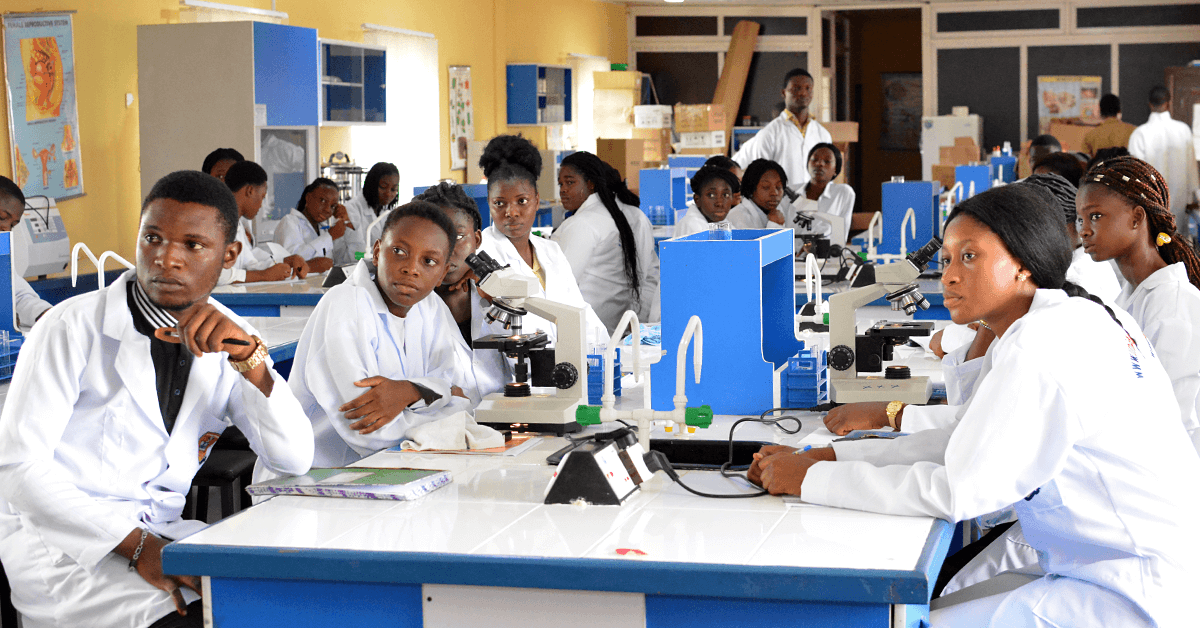
Biology students in the lab at the University of Medical Sciences
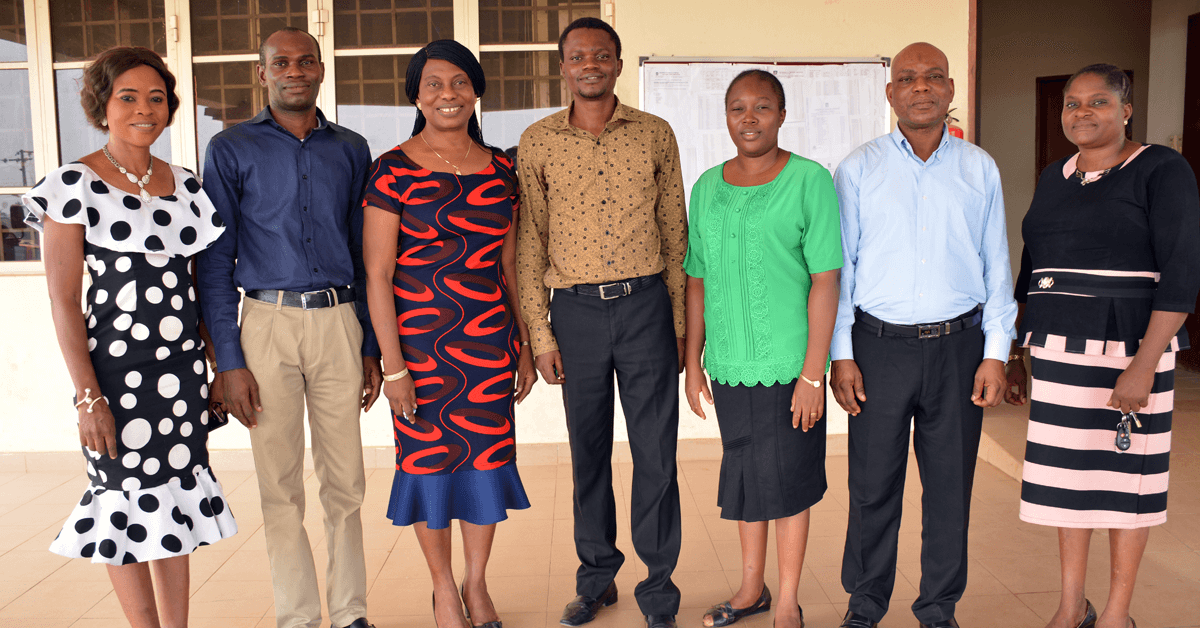
Faculty and staff in the Department of Biological Sciences
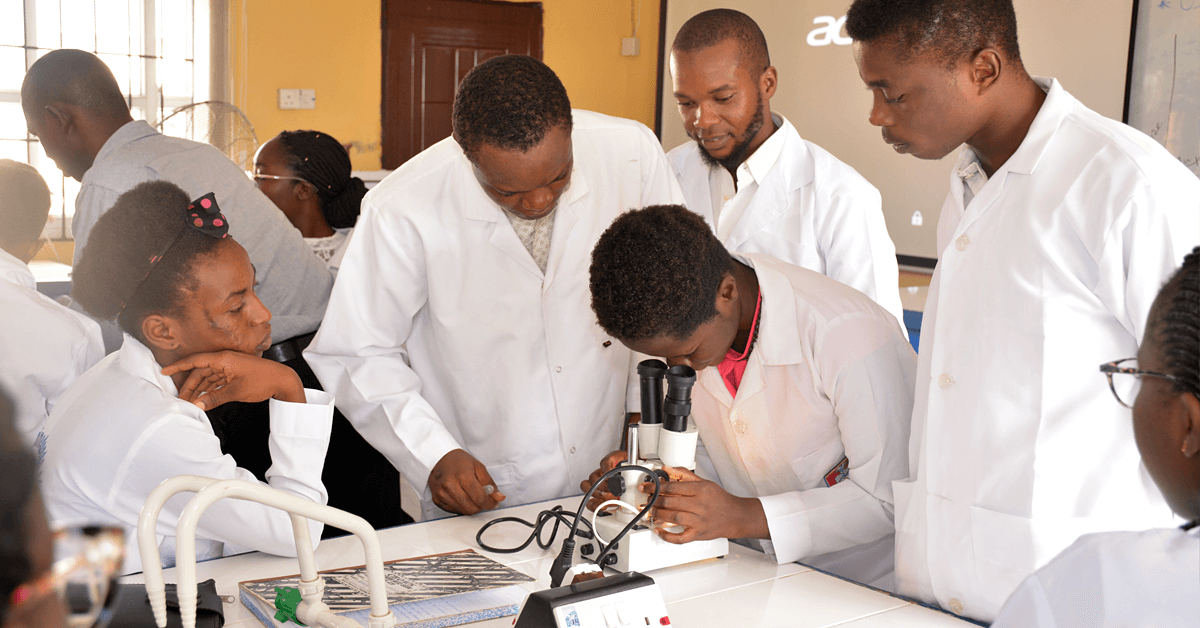
Dr. Oyeyemi leading students in practicals in the lab
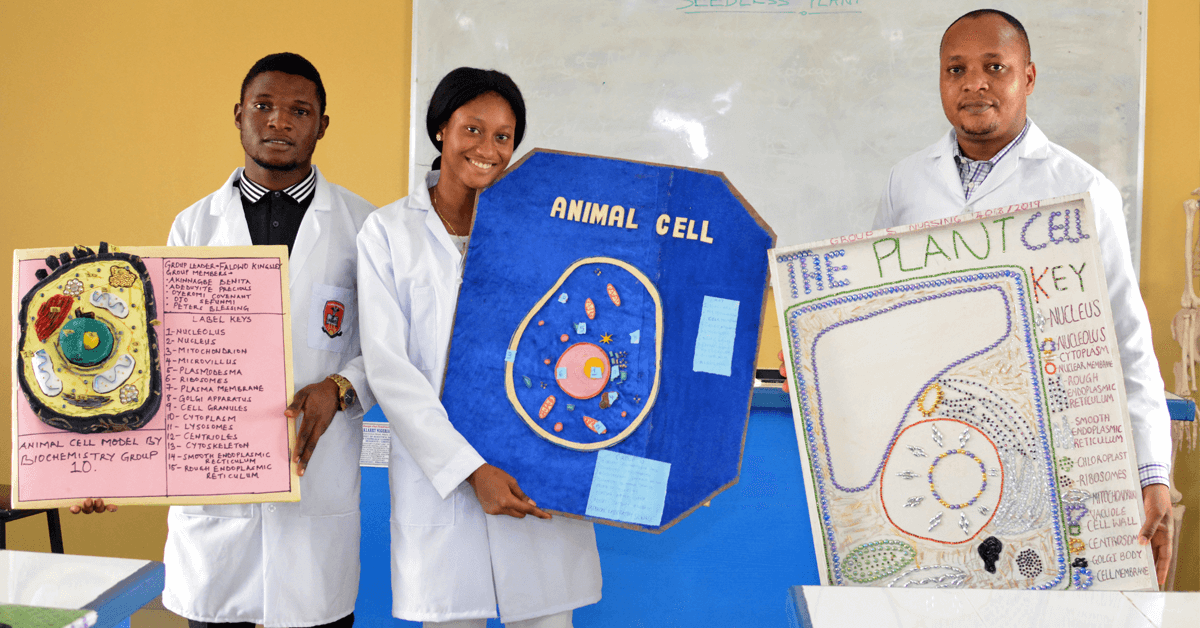
Students with posters they created to illustrate cells
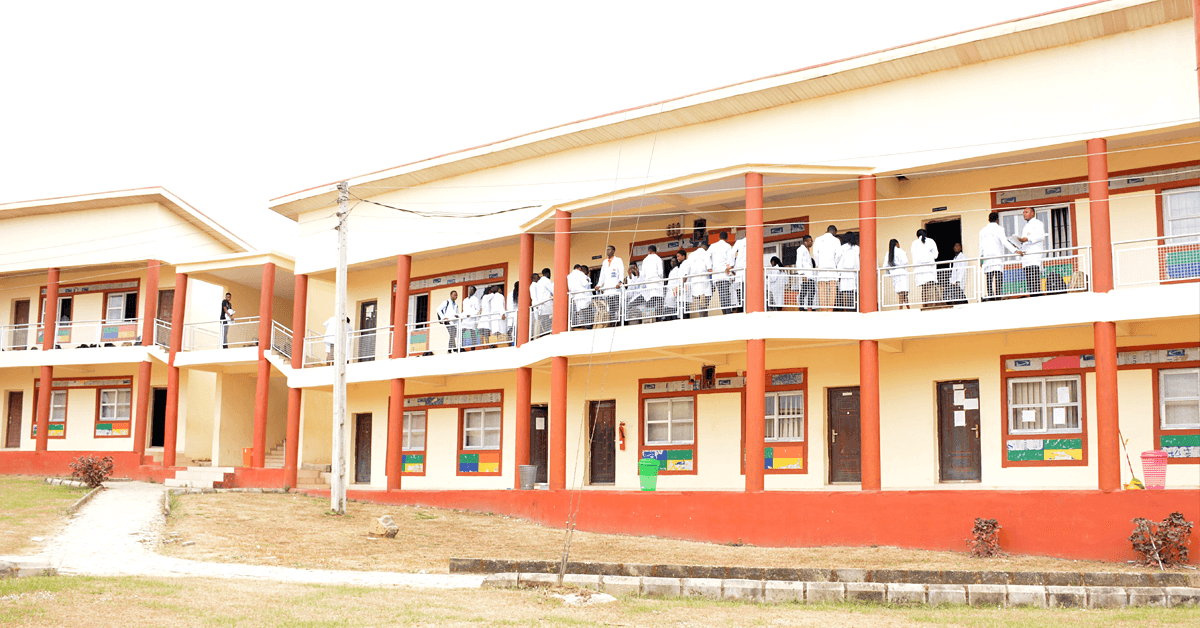
The Faculty of Science building at the University of Medical Sciences
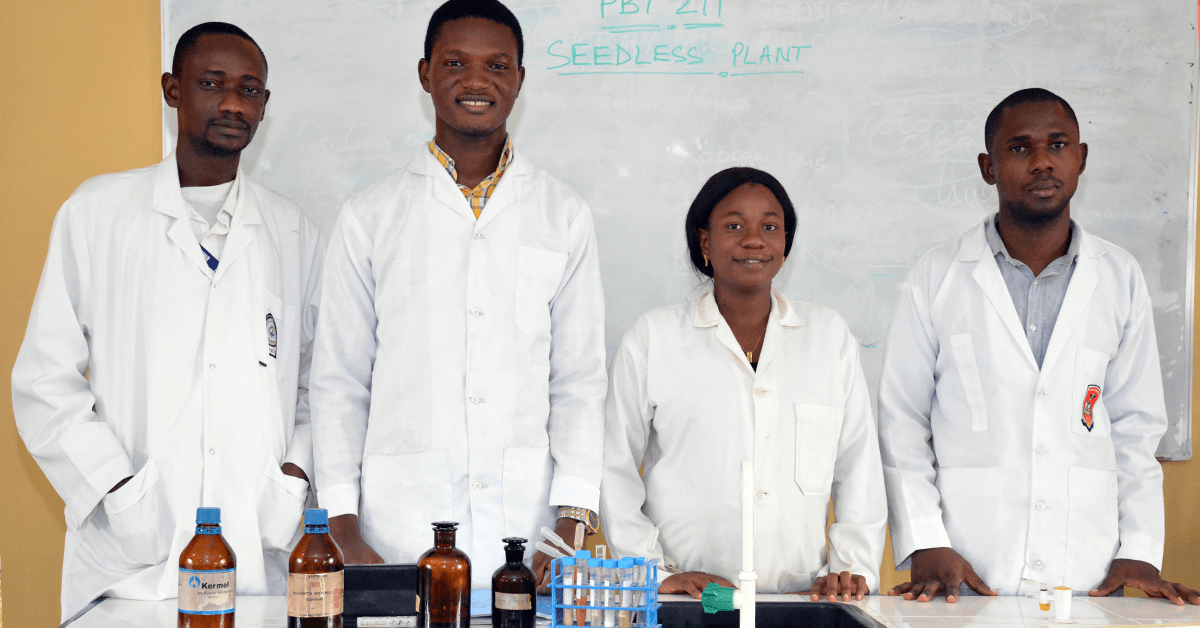
Lab technicians in the Department of Biological Sciences
Meet our Awardee
Established in 2015, the University of Medical Sciences (Unimed) is Nigeria’s first and only university dedicated wholly to the health sciences.
Located in Ondo City in southwestern Nigeria, Unimed was chartered by the government of Ondo State to correct the deficiencies in human resource development for health in this region of Nigeria.
Because biology underpins all health sciences, the Department of Biological Sciences plays a pivotal role at the Universtiy, providing foundational training for every admitted student.
Research Areas
The department’s research interests include: malaria parasite vaccine and drug discovery, neglected tropical parasitic immunodiagnostics, molecular epidemiology of parasitic diseases, genetic toxicology, anticancer drugs search, public health impact of mycotoxins, antimicrobials, antimicrobial resistance, and aquaculture.
We will be able to ask more compelling research questions that could merit international funding. This will foster international collaboration and partnership will no longer be skewed, but a win-win."
A New Approach for Fighting Malaria:
Prof. Roseangela Nwuba
Malaria is among the Nigeria’s biggest health challenges.
There are more than 25 million reported cases per year, the most of any country in the world. Thousands of Nigerians lose their lives to malaria. But even for those who survive, the disease represents a major personal disruption and a drain on national productivity.
Prevention efforts are helping to curb the malaria epidemic in Nigeria and elsewhere, but progress is slow. Vaccine development efforts have encountered challenges and setbacks. Meanwhile, the parasites seem to be evolving resistance to the most effective drugs in our arsenal.
New strategies are desperately needed to fight the disease.
 Roseangela Ifeyinwa Nwuba, PhD, a molecular and cellular parasitologist and Dean of the Faculty of Science at the University of Medical Sciences, is pursuing a novel approach.
Instead of a vaccine, which would work by triggering an immune response in the person who receives it, Prof. Nwuba and her collaborators want to use antibodies from people who are already immune to help others fight might malaria.
Treatments engineered from human antibodies, called therapeutic monoclonal antibodies (TMAs), have already been used successfully to treat diseases such as breast cancer, arthritis, psoriasis, and leukemia.
Purified antibodies from immune adults have also been used successfully to treat children suffering from malaria.
Unfortunately, however, only a small percentage of the population produces the right kind of antibodies; Prof. Nwuba’s initial studies suggest around 12%.
In order to make this kind of therapy available on a large scale, therefore, it will be necessary to clone the cells that produce the antibodies so that they can be mass produced.
Once that hurdle has been cleared, the next step would be to test their effectiveness, first in petri dishes and then in animal models. Clinical trials in humans would follow.
"This project has a huge potential for malaria prevention and control. It will be exploited for the development of a novel anti-malarial product that may place the university and the country at large in a key position as a major stakeholder in a therapeutic antibody," says Prof. Nwuba.
Equipment from Instrumental Access will help to ensure that Prof. Nwuba and the University of Medical Sciences can participate fully in this important work.
Share this Page

Many of our faculty are aspiring young researchers who collaborate with Northern partners for access to state-of-the-art facilities to enable them carry out innovative studies. Equipment support will bridge this barrier and allow for institutional participation and innovation that will attract more international funds to do research in Nigeria for Nigerians!"
About the Department
Location: Ondo City, Nigeria
Year Established: 2016
Number of Faculty: 11
Number of Students Impacted Annually: 1350 undergraduate
Shipment Status
Arrived on campus in Nigeria in November 2019
Why Instrumental Access?
The Department of Biological Sciences at the newly-established University of Medical Sciences needs equipment to support foundational training in biological sciences.
The number of students taking courses in the department has skyrocketed from 150 students in the first year to 800 students in the 2017-18 session. More equipment is therefore needed for effective practical teaching.
The department also plans to equip a research laboratory to support the graduate programs that are about to be launched, and to facilitate faculty research in molecular biology and genetics.
In the News

About Instrumental Access
To begin, we identify a pipeline of scientific talent. Then we rigorously screen universities and select those with the most potential to advance education and research through Instrumental Access.